Shop & Seller Pricing
Shipping Costs for Print Shops (Why DIM Weight Matters)
Light shirts in big boxes get charged as heavy packages. Measure volumetric weight first.
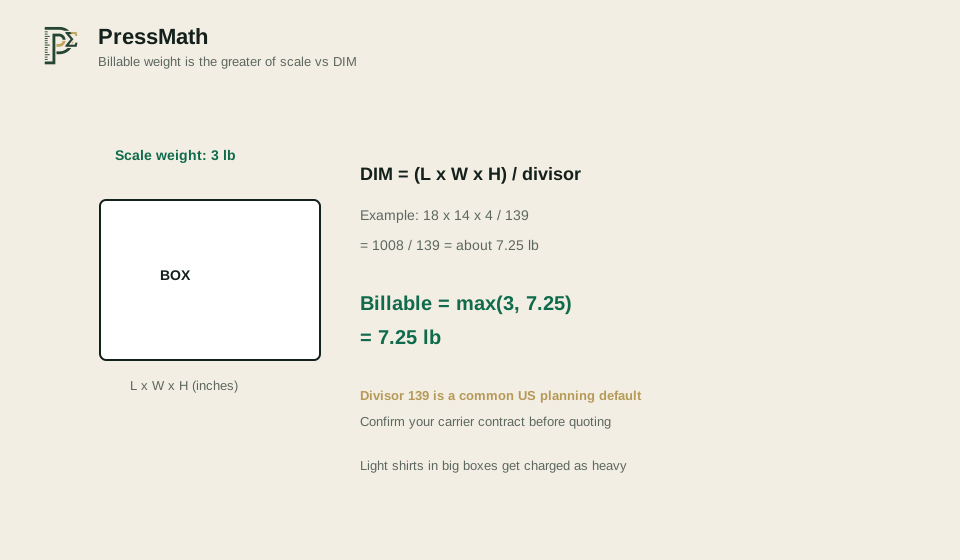
Direct answer: Carriers often charge the greater of actual scale weight and dimensional (DIM) weight. Light shirts in large boxes get billed as if they were heavier — that is why DIM math belongs in every print-shop shipping quote.
DIM formula (illustrative US domestic planning)
Dimensional weight (lb) = (Length × Width × Height in inches) ÷ divisor
Billable weight = max(actual lb, dimensional lb)
Assumption (labeled): Many US domestic parcel programs historically use divisor 139; some international or contract rates use other divisors (for example 166). Your negotiated account may differ — confirm with the carrier before promising postage.
Worked example (illustrative)
Box 18 × 14 × 4 in, actual weight 3 lb, divisor 139:
- Volume = 18 × 14 × 4 = 1,008 in³
- DIM = 1,008 ÷ 139 ≈ 7.25 lb
- Billable = max(3, 7.25) = 7.25 lb
You paid carton air, not shirt weight. Fold that billable weight into rates before you offer “free shipping.”
Shop workflow
- Measure the closed box outside dimensions.
- Weigh the packed order.
- Run both numbers in the Shipping Volumetric Weight Calculator.
- Price postage from billable weight, then check marketplace fees with Etsy Fee & Profit or POD comparison when relevant.
More marketplace context: Etsy fees for POD.
FAQ
Is divisor 139 always correct?
No. It is a common US domestic planning default. Contracts and international services can differ — verify with your carrier card.
Can I avoid DIM with smaller boxes?
Often yes. Right-size cartons and void fill so you are not shipping empty volume.
Does free shipping hide DIM?
No — you still pay billable weight. Fund it in item price or product margins.
Use these calculators next
Related guides
Keep exploring
Shop & Seller Pricing tools · Resources hub · All calculators · FAQ · Sitemap
Published Oct 8, 2026. Updated Oct 9, 2026.